

Properties don't decline overnight. They decline by inches at a time.
What one property tour taught me about how operations actually fail, and the question every owner should ask before they find out the hard way.

I toured a property last week for an ownership group.
Beautiful lakefront. The kind of asset that, on paper, would make anyone with capital lean forward.
Thirty minutes in, I realized the most important thing I was seeing wasn’t the condition of the property. It was the reservations system.
THIS WEEK’S POSITION

It’s been a few weeks since the last edition of The Position Report. We’ve been heads-down getting ready for peak season: the Florida-Alabama Outdoor Hospitality Convention, the Texas Association of Campground Owners Spring Show, and a lot of property visits in between.
Before I get into the update, a quick thank you. A lot of you came up to say hello at the shows, and several of you had real feedback on what you’ve been reading here. I don’t take that for granted. This works better as a conversation than a broadcast.
The Florida show also had the whole family along, kids and all. And it wasn’t just mine. Several of our team members brought their families to Orlando, too. There’s a camaraderie in that, the people you work with and the people you go home to all in one place, swapping stories between sessions.
That’s just how it goes in this business. Outdoor hospitality doesn’t let you draw a clean line between work and family, and we don’t try to. That’s a big part of why this industry fits me.
Here’s where the capital side stands.
Our Branson acquisition is still moving, just not the way we drew it up. Our bank left us at the altar. Rather than restart the whole financing process from scratch, we worked out seller financing instead.
Here’s the lesson I’m taking from it. When a deal is tight, when the historical financials are messy, or the DSCR is thin, that’s the wrong moment to be leaning on a bank you have no track record with. A new lender has no reason to give you the benefit of the doubt, and a hairy deal gives them plenty of reasons to walk.
On a clean and obvious deal, a new bank is fine. On a deal with nuance, it’s probably better to go with a lender you’ve already developed a real relationship with.
Our California deal is also progressing. Legal is doing their thing, and management onboarding is already underway with our team onsite this week.
On the financing side, one big item cleared this week: official approval on a $4.25 million refinance out of a construction loan on a park we recently built. I’d been holding my breath on that one for a while.
Separately, we’re structuring the financing on a land acquisition as a single, crossed loan, secured against a park we already own free and clear next door. The appraisal is ordered. A few weeks out.
One more item, and this one’s a preview. We’re getting ready to open a raise on that California deal. I’m not going to get ahead of the details here, but it’s far enough along to be worth flagging. More on that as it firms up.
None of this is dramatic. It’s the unglamorous part of the calendar: financing that has to close, properties that have to be ready, systems that have to hold before the guests show up.
At the end of the day, peak season doesn’t reward the operator with the most deals in motion. It rewards the one who did the quiet work before Memorial Day instead of during it.
Accredited investors interested in keeping up with our deals can sign up for our investor portal.
IN THE HANGAR
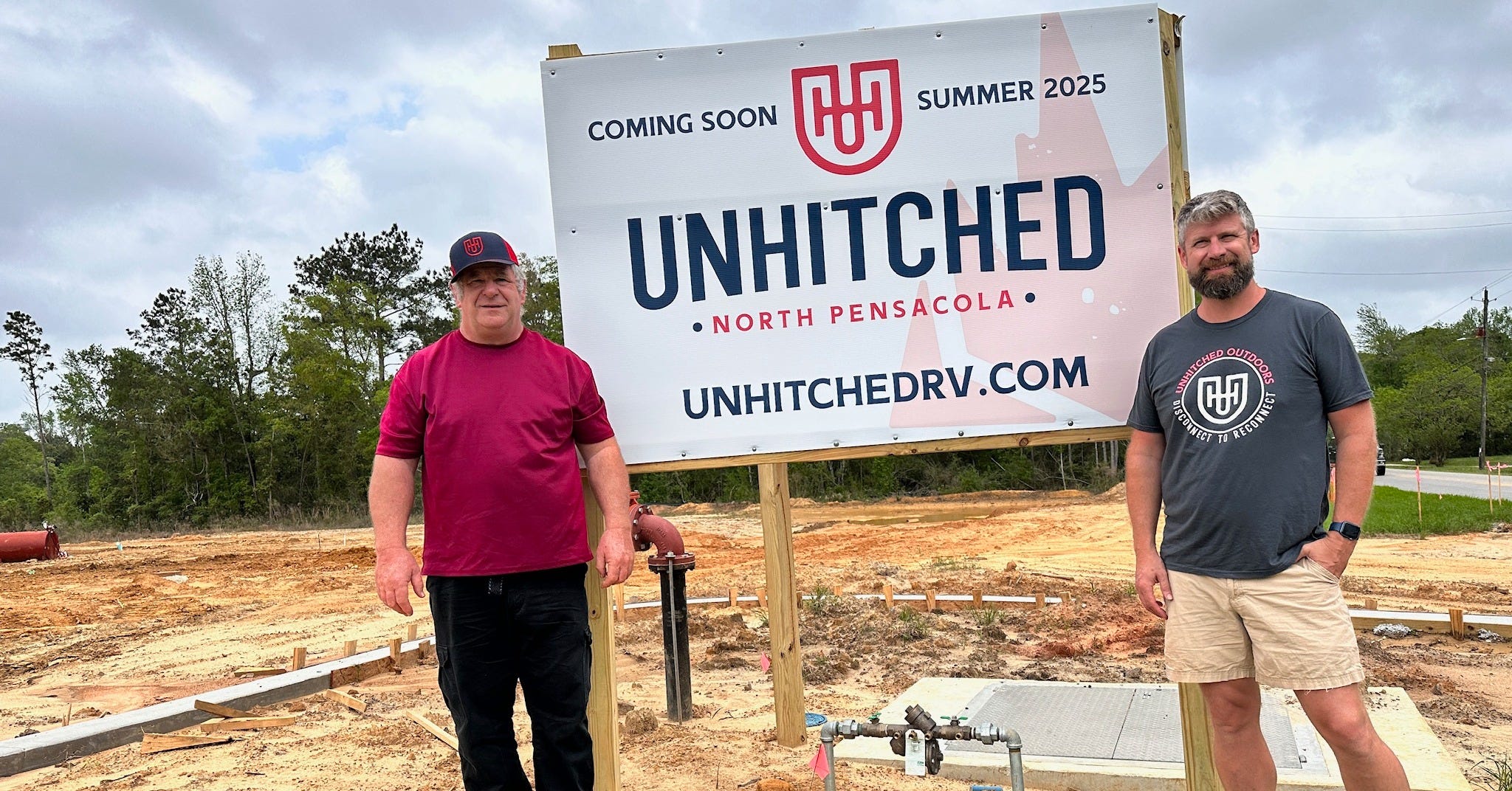
For a couple of months now, I’ve mentioned the centralized website we’ve been building across the portfolio. As of this week, version one is live.
It took longer than we planned. Getting the old setup and the new one to work together surfaced more issues than we expected. That’s usually how these projects go. The next phase is building out detailed subdomains for each property, but the core is in place and working. You can take a look at unhitchedrv.com.
One other system worth a mention: CallRail is now running portfolio-wide. Every property’s phone traffic runs through one place. We’re early, just starting to collect the data, the numbers, and the patterns behind them. For the first time, we can see how the phone actually performs across every property at once.
There’s a third system taking shape that I’ll save for its own edition. So many of the parks we take over arrive in rough shape that we were forced to build a methodical process for bringing a struggling property back to standard. We’ve started calling it the rescue protocol. More on that another time.
If you’re running an operating business of any kind, reply and tell me what you spent this week building.
ON THE RADAR
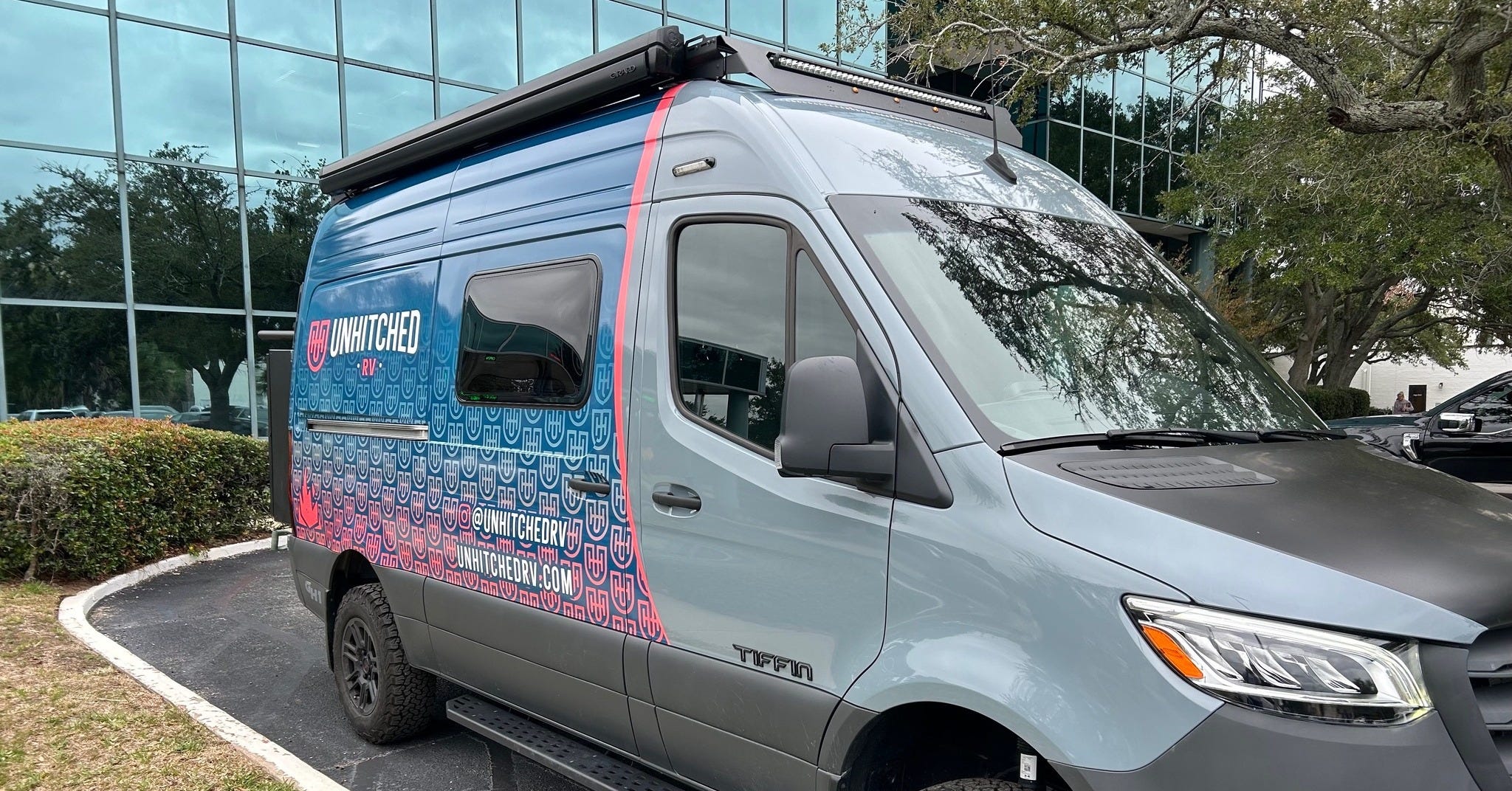
One of our properties is close to opening. We don’t have the certificate of occupancy in hand yet, so I won’t put a date on it, but we’ve already started the ramp-up booking process. Not delayed. Just not finished.
The bigger thing on my mind heading into Memorial Day isn’t a launch. It’s the seasonal-park question.
I’ve spent time this spring up north watching what it actually takes to run a seasonal park. The shutdown, the startup, the labor of opening and closing a property every single year. A seasonal park has a short window to make its money. One bad stretch of weather and the whole year’s numbers move. You de-risk it by collecting the season up front, but the rate has a ceiling, and that ceiling doesn’t climb much with inflation.
I’m not making a call on it here. It’s just the kind of question worth working through in the off-season, because peak season has a way of answering it for you.
Lessons like these are what we’re building RVU around: the real playbook from inside the operation.
THE DEBRIEF
Back to the property I toured.
The condition was rough. Common areas, sites, store, signage, and landscaping. None of it is catastrophic on its own. Together, it told me the asset hadn’t had real operating attention in a while. That part wasn’t surprising.
The thing I hadn’t expected was what I learned about how the property actually runs.
The on-site phones don’t really work. The internet at the property isn’t strong enough to support them. So reservations are routed to a call center. The call center is offshore. The call center is also, according to the consistent account of the staff and the guests, not very good. They don’t know the property. They aren’t friendly. They don’t try to sell anyone on staying.
The guests have figured out a workaround. They’ve stopped calling the reservation number. They call the staff’s personal cell phones instead.
That’s how reservations are getting handled at this property. On the cell phones of the people working at the front desk. Without a system. Without notes. Without any of the infrastructure that a reservations process is supposed to provide.
The staff member who explained this to me did so plainly. She wasn’t complaining. She was just describing how she gets her job done.
A property in this condition is almost always a property that nobody with authority at the management company has walked through recently. The call center isn’t the problem. The call center is the symptom.
Properties rarely decline like this overnight. They decline by inches at a time. A call center decision here. An untrained hire there. A site that doesn’t get attention this quarter, then doesn’t get attention next quarter. None of it shows up with flashing lights. Unfortunately, most of the time, it shows up, eventually, when a fresh pair of eyes takes a close look.
The on-site staff becomes blind to it. The guests either get used to it or leave. The people running the company often don’t know. Or don’t care to know.
Either way, the property keeps slipping, and nobody on the inside sees the inches.
Then someone new walks the property for the first time. The missed attention, the process that was never built, the small wrong calls, the pieces that went missing along the way. None of it happened at the same time. But at the end of the day, it all ends up looking the same in a first impression.
From the trenches,
Bob